
The Sweeney Law Firm understands that traumatic brain injury is a silent epidemic. A traumatic brain injury or TBI can be caused by a car accident or even a fall. In the United States, more than 5.3 million people live with disabilities cause by TBI. Young adults and the elderly are at the highest risk for TBI. If you or a loved one suffered a brain injury due to a surgical error or the worsening of a condition that was misdiagnosed, you may be eligible for damages. Call the experts at the Sweeney Law Firm and let us review the facts to see if you have a brain injury medical malpractice case. There is no cost for representation unless there is a settlement or cash recovery made on your behalf.
All
Videos
Sweeney Case Results
News
Medical Malpractice
Nursing Home Neglect
Vehicle Collisions
21 Alive Legal Expert Videos
Commercials
Sweeney Case Results - Medical Malpractice
Sweeney Case Results - Vehicle Collisions
Personal Injury
Sweeney Case Results - Nursing Home Neglect
Wrongful Death
Sweeney Case Results - Wrongful Death
Other Practice Areas
Sweeney Case Results - Other Practice Areas
Sweeney Case Results - Personal Injury
Preventable Medical Errors Commercial
When we need to use the health care system, we do our best to choose the right doctor and trust that we will receive the highest quality of care. Unfortunately, for too many patients are injured every year when medical providers don't fallow patient's safety rules and makes medical mistakes. Medical errors can result in a life time of harm and can cause disastrous consequences to families. If you or a loved one has been injured as a result of a medical error, call the Sweeney Law Firm now at 1-866-793-6339. Preventable medical errors pose a real risk and are responsible for billions in unnecessary health care costs. The good news is that some major hospitals are taking important steps to determine how errors happen and how they can be prevented. When Indiana medical errors happen it's important to do a thorough investigation so it doesn't happen again to other patients. If you or a loved one were the victim of a medical mistake or have questions about what happened when you received medical care, call the Sweeney law firm now. 1-866-793-6339 (Toll Free) 1-260-420-3137 (Local) 1-260-969-0321 (Fax)
Falls Commercial
Did you know that falls are the leading cause to injury death to those over the age of sixty five? Millions of people in the United States are injured every year to falls that could have been prevented had basic safety measures been followed. The Sweeney Law Firm understands how a serious fall can turn you world upside down. If you or a loved one suffered serious injuries in a fall call the Sweeney Law Firm now. We offer free consultation and we will never charge a fee unless we make a recovery for you. If you or a loved one has been injured due to a fall in Indiana, contact The Sweeney law firm today for a Free Consultation. INDIANA NURSING ACCIDENT LAWYERS 1-866-793-6339 (Toll Free) 1-260-420-3137 (Local) 1-260-969-0321 (Fax)
Medical Malpractice Limits in Indiana
Host 1: Welcome back to InSight, we are joined now by Dave Farnbaugh from the Sweeney Law Firm. So Dave, there are some medical malpractice laws that are unique to Indiana and there have been a number of news stories lately regarding medical errors and medical malpractice. Tell us about those. Dave: Well, we've seen a lot of news stories lately that medical malpractice was at the forefront. There was a big news story a few weeks back about a local pain physician who the attorney general is pursuing and there's been the epidemic in Massachusetts with the fungal meningitis. So there has been a lot of news on the topic of medical malpractice and what I thought we'd do today is spend a little bit of time explaining to people maybe some of the laws that govern medical malpractice here in the state of Indiana that are surprising when they talk to people that are unique to Indiana. Most people don't realize that in the state of Indiana we have a cap on medical malpractice damages. Host 2: So you can only sue for so much. Dave: Right, it's $1,250,000 and that's shocking when I tell a lot of people, since we handle birth injury cases where a little baby during the delivery can be harmed and require a lifetime of medical treatment. That could realistically cost tens of millions of dollars. In Indiana we have a hard cap of $1,250,000 so it doesn't matter how much harm is cause, you're capped out at a $1,250,000. When I tell people that they're completely shocked. How could that be that there could be this ceiling on the amount of damages in respective to the amount of harm? Host 2: Is there anything that somebody could do about that if they are in that sort of situation? Dave: No, in fact there was a recent case where attorneys tried to challenge the cap and the Indiana Supreme Court, this was primarily on procedural grounds, just ruled that the cap is gonna stay in place. So its been a law since 1976 we've had a cap on damages. We've adjusted it for different time frames, but the current cap is $1,250,000 which with today's medical cost is woefully inadequate. The other interesting thing that's unique about Indiana Medical Malpractice Law is the notion that we have a medical review panel that decides on the merits of cases before you can file a lawsuit. It's the only area of law that I'm aware of in Indiana where you're sort of judged by your peers. When you file a medical malpractice lawsuit in the state of Indiana, if you sue physicians, a panel of three physicians is convened to decide whether the case has merits. That's unique. If you sue a lawyer, there's not a panel of three lawyers or an architect. But if you sue a physician in the state of Indiana there's a medical review panel that's formed to decide the merits of your case. Host 2: One, I would think, just in theory that that's a little harder to get past because their obviously cognisant of the fact that these are their peers in their industry. So I would think that it’s almost like you gotta go two steps and that first step I would think is challenging. Dave: Well it is challenging because it’s a situation where a lot of times physicians know one another and they attend the same seminars and what not. So it is difficult. I think cases that tend to fall in the grey area of medical malpractice, I think a lot of times physicians do get the benefit of the doubt with their peers on the medical review panel. Which makes it a lot more challenging for patients and consumers to try to get justice if there’s a medical malpractice case. So we have some very unique and challenging laws that present some hurdles to patients when they are the victims of medical malpractice in the state of Indiana. Host 2: Well obviously you’re the expert on that and it is very hard to digest all of the rules and what you need to do so if somebody thinks they have a medical malpractice suit the best thing to do is contact you guys. Because you guys definitely tell them whether or not they should proceed. Dave: Ya, oftentimes we get a lot of calls and we explain to people, “Look, we’re sorry for what happened to you but it appears there’s no malpractice. Occasionally we do get calls where the cases are meritorious. So the only way you’re ever going to find out if you have a meritorious medical malpractice is to call an attorney who specializes in that area. Host 2: Well if you have a question about medical malpractice, give the guys at Sweeney Law Firm a call - they can help you out today.
Nursing Home Concerns with the Affordable Care Act
Host 1: Welcome back to InSight with Dave Farnbaugh who has been kind enough to join us again. We are talking about nursing home care and it's such an important topic. President Obama was reelected yesterday and that obviously will raise some issues because that's going to mean that Obama Care is not being repealed. So what does that mean for nursing home care? Dave Farnbaugh: Well, it's a practical matter, I think what it's going to mean is that most people are saying that when it is really fully phased in - the reimbursements to nursing homes and other providers is going to be scaled back. As a practical matter, if reimbursements are going to be scaled back, in my mind, what that's going to result in is probably nursing homes trying to accomplish their staffing needs with fewer people. There is sort of an old adage in our business that no matter what type of an injury occurs in a nursing home, whether that be pressure sores, falls, dehydration, or whatever harm occurs in a nursing home - usually relates from under-staffing. If you had adequate staff to take care of the residents based on their needs and their what we call acuity then most injuries in nursing homes wouldn't occur. But if you don't have enough staff, people have a lot of needs and you don't have enough people to cover the various wings and halls in a nursing home. That's where most of the injuries occur. Host 2: Is that what you're seeing? As the Sweeney Law Firm is handling all these cases against nursing homes, is that the trend you see is that it's under-staffing? Dave Farnbaugh: I think that's a big part of it. It's under-staffing. One of the ways you can reduce your overhead cost if you own a nursing home is reduce staff. The other thing that we see is unfortunately less resources and time to train people. The people that are employed to work in nursing homes are going into it, caring and compassionate people, that's why they're in a nursing home. Everybody's motivation is good who runs a nursing home. Nobody wants to see somebody get hurt in a nursing home, but these are people that have a lot of needs and these people that work there, nurse's aids and nurses, they require a lot of training for the specific needs of the elderly. So we see often times when we sue nursing homes that the training is inadequate and that results to injuries. That's one of the trends we're seeing. One of the more disturbing trends that we're seeing nowadays in cases against nursing homes is the notion now that some nursing homes are not carrying liability insurance. It's hard to believe. In Indiana, if you drive a car, you have to have insurance. In the state of Indiana, it's pretty remarkable, if you own a nursing home, you don't have to carry liability insurance. I tell people that and they're stunned. Another trend that we're seeing is a lot of nursing homes are asking families when they're doing their admission paper work to sign an agreement that says you're going to give up your right to make a legal claim against a nursing home. It's called forced arbitration, where you agree that if you have some sort of dispute with a nursing home or someone's injured in connection with nursing home care, you have to sign an arbitration agreement that calls for your case to be decided by someone that's an arbitrary for the nursing home industry. That's not exactly the fairest way to handle a dispute. Those are some of the things we see. What we've done at our office is put a lot of information on our website. If you go to our website, you're going to find a section on nursing homes that contains a lot of helpful information for consumers about what to look for in placing their loved one in a nursing home, what are some of the things to look for, questions to ask, and those sorts of things. We really think that we've really developed a fountain of information for all things related to nursing home and nursing home care. Host 2: Well that's a great place for people to go, we're all in some situation where we need to be aware or know what we would do if we need a nursing home for ourselves or a loved one. Check that out at SweeneyLawFirm.com. If you think that you may have a case of need advice, you can give them a call at 420-3137
Medical Malpractice Limits in Indiana
Host 1: Welcome back to InSight, we are joined now by Dave Farnbaugh from the Sweeney Law Firm. So Dave, there are some medical malpractice laws that are unique to Indiana and there have been a number of news stories lately regarding medical errors and medical malpractice. Tell us about those. Dave: Well, we've seen a lot of news stories lately that medical malpractice was at the forefront. There was a big news story a few weeks back about a local pain physician who the attorney general is pursuing and there's been the epidemic in Massachusetts with the fungal meningitis. So there has been a lot of news on the topic of medical malpractice and what I thought we'd do today is spend a little bit of time explaining to people maybe some of the laws that govern medical malpractice here in the state of Indiana that are surprising when they talk to people that are unique to Indiana. Most people don't realize that in the state of Indiana we have a cap on medical malpractice damages. Host 2: So you can only sue for so much. Dave: Right, it's $1,250,000 and that's shocking when I tell a lot of people, since we handle birth injury cases where a little baby during the delivery can be harmed and require a lifetime of medical treatment. That could realistically cost tens of millions of dollars. In Indiana we have a hard cap of $1,250,000 so it doesn't matter how much harm is cause, you're capped out at a $1,250,000. When I tell people that they're completely shocked. How could that be that there could be this ceiling on the amount of damages in respective to the amount of harm? Host 2: Is there anything that somebody could do about that if they are in that sort of situation? Dave: No, in fact there was a recent case where attorneys tried to challenge the cap and the Indiana Supreme Court, this was primarily on procedural grounds, just ruled that the cap is gonna stay in place. So its been a law since 1976 we've had a cap on damages. We've adjusted it for different time frames, but the current cap is $1,250,000 which with today's medical cost is woefully inadequate. The other interesting thing that's unique about Indiana Medical Malpractice Law is the notion that we have a medical review panel that decides on the merits of cases before you can file a lawsuit. It's the only area of law that I'm aware of in Indiana where you're sort of judged by your peers. When you file a medical malpractice lawsuit in the state of Indiana, if you sue physicians, a panel of three physicians is convened to decide whether the case has merits. That's unique. If you sue a lawyer, there's not a panel of three lawyers or an architect. But if you sue a physician in the state of Indiana there's a medical review panel that's formed to decide the merits of your case. Host 2: One, I would think, just in theory that that's a little harder to get past because their obviously cognisant of the fact that these are their peers in their industry. So I would think that it’s almost like you gotta go two steps and that first step I would think is challenging. Dave: Well it is challenging because it’s a situation where a lot of times physicians know one another and they attend the same seminars and what not. So it is difficult. I think cases that tend to fall in the grey area of medical malpractice, I think a lot of times physicians do get the benefit of the doubt with their peers on the medical review panel. Which makes it a lot more challenging for patients and consumers to try to get justice if there’s a medical malpractice case. So we have some very unique and challenging laws that present some hurdles to patients when they are the victims of medical malpractice in the state of Indiana. Host 2: Well obviously you’re the expert on that and it is very hard to digest all of the rules and what you need to do so if somebody thinks they have a medical malpractice suit the best thing to do is contact you guys. Because you guys definitely tell them whether or not they should proceed. Dave: Ya, oftentimes we get a lot of calls and we explain to people, “Look, we’re sorry for what happened to you but it appears there’s no malpractice. Occasionally we do get calls where the cases are meritorious. So the only way you’re ever going to find out if you have a meritorious medical malpractice is to call an attorney who specializes in that area. Host 2: Well if you have a question about medical malpractice, give the guys at Sweeney Law Firm a call - they can help you out today.
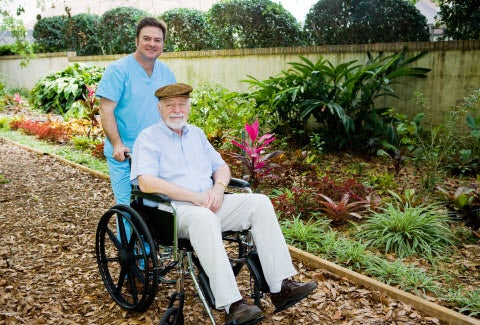
Indiana Nursing Home Falls
Did you know that every year more than 1800 of our nation's elderly lose their lives in nursing home falls. Those who survive nursing home falls frequently sustain debilitating hip fractures and head injuries that cause permanent disability and reduced quality of life. The Sweeney law firm is committed to the safety of nursing home residents. VICTIM OF INDIANA NURSING HOME ABUSE? If your loved one has been injured as a result of nursing home neglect, call the Sweeney law firm now. 1-866-793-6339 (Toll Free) 1-260-420-3137 (Local) 1-260-969-0321 (Fax) Indiana Nursing Home Abuse Lawyers - The Sweeney Law Firm - 866.793.6339
Important Considerations about Nursing Homes
Host 1: Welcome back to InSight. We are joined now by Dave Farnbaugh with the Sweeney Law Firm and we're going to talk today about nursing homes.This is something that lots of generations are dealing with today because whether you are getting ready to make that transition into a nursing home or you are moving your parents into a nursing home, we're all sort of dealing with it and we want to be sure that we're making the right choices. So, luckily we have the support of the Sweeney Law Firm and what are some of the questions that we should be asking when we call an attorney? Because really, we probably should be calling an attorney when we're making some of those choices. Dave Farnbaugh: Well I don't know Emily that you would necesarily call an attorny before you would place your loved one in a nursing home. Maybe I can give the views some background on why this is a topic of some interest to me and our law firm. We've been handling nursing home cases, where we file cases against nursing homes, for the last 15 or 20 years and so during that period of time, you learn a lot about why people have to go into nursing homes. You learn a lot about the care that they receive and most notibly these lawsuits are brought because of safety issues that arise in lawsuits. It's sort of an unfortunate reality that many many people that end up in a nursing home wind up with injuries or even death for that matter. This is something that has really became a particualr insterest with our law firm. We pursue a number of these cases. We do these cases all over the state so what we like to do when we have forms like this is to share information that we've learned or acquired over the years about how to prevent injuries to try to make a difference that way. What happens most frequently with nursing homes is someone is in a hospital, they have a serious medical condition that requires rehabilitation or a loved one needs skilled nursing care. They've developed alzheimers, dementia, or some other condition that requires skilled nursing care and suddenly a family is confronted with a decision. Where are we going to place Mom or Dad or a spouse for nursing care? Often times, we don't give a lot of thought to that ahead of time. A lot of times, you're at a hospital and the doctor comes in and says, "Look, we're going to release you tomorrow. We're going to be releasing you to a nursing home care." People really haven't given a lot of thought to where we are going to place Mom or Dad or a spouse. So, I guess the idea is that there is a lot of resources out there that are available now-a-days for people looking to do their homework and do research on what's the best placement. And of coarse we feel, based upon our experience having to sue nursing homes and seeing some of the things that can happen from a safety stand point, that it's important for consumers out there to research some of the problems or safety issues in nursing homes. Probably the best resource that's out there is a website called medicare.gov or a lot of people can reach it by googleing "nursing home compare". And when you go on the website for "nursing home compare", you find that you can actually access information online with the various state departments of health (the Indiana State Department of Health). You can actually go online an research what they call "citations" or "f tags" where nursing homes have been cited by the Indiana department of health or a resident developed pressure sores or falls. There's statistics on there. There's plans of correction those sorts of things. You can actually do homework on nursing homes before you have to place your loved one. Indiana has an obvincemen program where those nursing home obvincemen, which are employed by the state. That office is there to help families with issues that arise from nursing home care. What we recommend to families is call the local obvincemen and ask them questions about which facilities have you had problems with? What recommendations would you make when we place our loved one in a nursing home? So there's lots of resources that are available. Also, just check around with people before you place a loved one. What experiences have other families that you know have had in a nursing home. Have you noticed that there's adequate staffing? One of the things that we're going to talk about in the next segment is the staffing in nursing homes. Host 2: There definitely are some advocates and people do need to do their homework. When we come back, like Dave said, "We're going to talk about some of the substandard care and issues that are there. Stick with us, we'll be right back on InSight.
Nursing Home Concerns with the Affordable Care Act
Host 1: Welcome back to InSight with Dave Farnbaugh who has been kind enough to join us again. We are talking about nursing home care and it's such an important topic. President Obama was reelected yesterday and that obviously will raise some issues because that's going to mean that Obama Care is not being repealed. So what does that mean for nursing home care? Dave Farnbaugh: Well, it's a practical matter, I think what it's going to mean is that most people are saying that when it is really fully phased in - the reimbursements to nursing homes and other providers is going to be scaled back. As a practical matter, if reimbursements are going to be scaled back, in my mind, what that's going to result in is probably nursing homes trying to accomplish their staffing needs with fewer people. There is sort of an old adage in our business that no matter what type of an injury occurs in a nursing home, whether that be pressure sores, falls, dehydration, or whatever harm occurs in a nursing home - usually relates from under-staffing. If you had adequate staff to take care of the residents based on their needs and their what we call acuity then most injuries in nursing homes wouldn't occur. But if you don't have enough staff, people have a lot of needs and you don't have enough people to cover the various wings and halls in a nursing home. That's where most of the injuries occur. Host 2: Is that what you're seeing? As the Sweeney Law Firm is handling all these cases against nursing homes, is that the trend you see is that it's under-staffing? Dave Farnbaugh: I think that's a big part of it. It's under-staffing. One of the ways you can reduce your overhead cost if you own a nursing home is reduce staff. The other thing that we see is unfortunately less resources and time to train people. The people that are employed to work in nursing homes are going into it, caring and compassionate people, that's why they're in a nursing home. Everybody's motivation is good who runs a nursing home. Nobody wants to see somebody get hurt in a nursing home, but these are people that have a lot of needs and these people that work there, nurse's aids and nurses, they require a lot of training for the specific needs of the elderly. So we see often times when we sue nursing homes that the training is inadequate and that results to injuries. That's one of the trends we're seeing. One of the more disturbing trends that we're seeing nowadays in cases against nursing homes is the notion now that some nursing homes are not carrying liability insurance. It's hard to believe. In Indiana, if you drive a car, you have to have insurance. In the state of Indiana, it's pretty remarkable, if you own a nursing home, you don't have to carry liability insurance. I tell people that and they're stunned. Another trend that we're seeing is a lot of nursing homes are asking families when they're doing their admission paper work to sign an agreement that says you're going to give up your right to make a legal claim against a nursing home. It's called forced arbitration, where you agree that if you have some sort of dispute with a nursing home or someone's injured in connection with nursing home care, you have to sign an arbitration agreement that calls for your case to be decided by someone that's an arbitrary for the nursing home industry. That's not exactly the fairest way to handle a dispute. Those are some of the things we see. What we've done at our office is put a lot of information on our website. If you go to our website, you're going to find a section on nursing homes that contains a lot of helpful information for consumers about what to look for in placing their loved one in a nursing home, what are some of the things to look for, questions to ask, and those sorts of things. We really think that we've really developed a fountain of information for all things related to nursing home and nursing home care. Host 2: Well that's a great place for people to go, we're all in some situation where we need to be aware or know what we would do if we need a nursing home for ourselves or a loved one. Check that out at SweeneyLawFirm.com. If you think that you may have a case of need advice, you can give them a call at 420-3137
Truck Accidents
LEE KELSO: Did you know that every sixteen minutes a person is either injured or killed in an accident involving an eighteen-wheeler, tractor trailer, or semi-truck? A typical fully-loaded large commercial truck can weigh eighty-thousand pounds or more, while a typical passenger automobile weighs only about three-thousand pounds. While semi-trucks make up just three-percent of the vehicles on the road, they are involved in twelve-percent of fatal accidents on the road. Joining us today to discuss legal claims arising from truck accidents is David Farnbauch, attorney with the Sweeney Law Firm. Thanks for taking sometime with us today to advise. DAVID FARNBAUCH: Pleasure to be here today. LEE KELSO: David you and your law firm have handled more than your share of truck cases over the past few years. What are some of the most common causes of these truck accidents? DAVID FARNBAUCH: Well I think one of the most common causes of truck accidents is driver fatigue, often over the road truck drivers will be driving for many hours at the time of the accident, they are tired and they are fatigued that results in an accident. LEE KELSO: When a truck driver causes a personal injury on a highway, what are some of the potential parties that might be held responsible other than the truck driver himself? DAVID FARNBAUCH: Well truck accident cases are particularly complex because one of the things that we have to do initially is find out whose involved in that truck being out on the road. Often there will be an owner of the actual truck itself. There will be another owner of the tractor. They'll be a legal entity that will be responsible for the shipment of the cargo that's involved in the accident. Thus, there is any number of parties that may be involved in the accident as defendants in a truck accident case. LEE KELSO: David in your experience, what is it that makes a legal case against a truck driver more challenging or complex in cases that involve two cars that collide on a roadway? DAVID FARNBAUCH: Well I think that there are a number of things that make these cases more complex. First of all, most of the time that we are dealing with a truck accident we are dealing with a more significant and often a more catastrophic injury. When a seventy-thousand pound semi collides with a motor-vehicle normally there are serious injuries that are involved, so that increases the complexity of the claim. Second of all, these cases involve extensive investigation. Often the whereabouts or the activities of a truck driver for up to a week before the event. So we have to obtain all of the driver logs and evidence of where that truck driver was. Normally there is an accident where reconstruction is involved to try to quantify what speed the truck was traveling and where the vehicles came together, so normally there would be accident reconstruction experts that are involved in these cases, so these cases can be very complex. LEE KELSO: Can you take our viewers through some of the steps you and your law firm takes when a client comes to you after an accident involving a semi-tractor trailer? DAVID FARNBAUCH: Well one of the first things we do if we are hired shortly after an accident is to get a letter to the trucking company and ask them to preserve the evidence or preserve the truck and the parts and pieces of the truck immediately after an accident, so that evidence can be analyzed by investigators and accident reconstruction people to try to piece together how the accident happened. The other thing that we try to do is immediately secure as I mentioned before the driver logs. When truck drivers are driving a load on the highways, they are required to keep records of their whereabouts. What time they start the trip, how many stops they made and all the information has to be logged in an employees log book. So we try to immediately get possession of a copy of the driver's log book. LEE KELSO: If one of our viewers is seriously injured in an accident involving a tractor trailer, what advice do you offer that person or their family? DAVID FARNBAUCH: Well the most important advice that I can give particularly a truck accident is the need to call a lawyer who has experience doing truck injury cases immediately after the accident. Trucking companies immediately dispatch investigators and accident reconstruction people to the scene often within hours of when an accident occurs. So they are able to secure the evidence, secure witness statements right away. In order to present a case it's important for the injured party to get a hold of a lawyer right away so that your own attorney can get out and secure witness statements and secure the evidence right after an accident as well. LEE KELSO: Thanks for spending some time with us today David sharing you experience in these striking cases. DAVID FARNBAUCH: Thanks for having me.
Accident Dos and Don'ts
Host 1: Welcome back to INSight. We are joined now by Dave Farnbaugh and we’re going to talk about a really important topic, something that people don’t necessarily think of until they’re in a situation. What do you do after you’ve been involved in an accident? It’s just one of those unfortunate things. Host 2: It’s something that we don’t want to happen, but unfortunately it does probably happen to everyone one at some point in their life. In their life, their driving down the road, and I’m in the car, let’s say someone hits me even and I’m not responsible for it at all. Let’s say even it’s a minor accident, do I need to get on the phone right then? I mean obviously I call the police first, then do I need to get on the phone and call the Sweeney Law Firm right then? What do I do? Dave: Well, the issue of whether you should call an attorney right away depends on the severity of the injuries that are involved. If it’s a minor crash then probably calling an attorney’s not the best idea but if you’ve been injured in an accident, you’ve been taken to the hospital, you’ve been treated at the emergency room, you have some on going symptoms and problems after the accident. It probably makes sense before you start talking to the insurance company to find out a little bit about what your rights are, about what’s going to happen, and those sorts of things, so it depends a lot on the severities of the injuries in the crash. Host 1: We live in an age where everyone has a cell phone that they can take pictures with. Do you recommend that if you’ve been in an accident, a car accident for example, that you or your family takes pictures right away? At the scene or later on? Dave: I think that the most important issue as it pertains to photographs is photographing the injuries themselves. Most of the time after a car crash, the insurance companies are going to be out taking a lot of photographs of the damage of the cars, but what comes and goes are the injuries from the crash itself. Often times people have bruises, seat belt bruises, or they’ll have a collection of blood, contusion, or hurt some part of their body that is going to be here today; gone in a few days. If you don’t take photographs of those injuries then that critical evidence can be lost. Host 2: I know the couple of times that I’ve been in accidents, they’ve all been minor thank heavens, but they’ve not been my fault. They’ve been the other drivers fault. So the others drivers insurance company has called me and questioned me. Is it ok for me to talk to them? Dave: Well, that’s probably the big issues that a person has to decide from the get go about how they’re going to approach the insurance company contacting them. What people have to understand is that insurance companies are in business not only to pay claims but to minimize the amount of money that they pay out in claims. So insurance adjusters receive training on how to talk to people on the phone, get you to say things that maybe aren’t in your best interest. They always ask you, “Well how are you doing?” Most people don’t like to be on the phone and cry and whine about their own injuries, so a lot of people say, “Well, I guess I’m doing ok” or “I’m feeling better.” That’s a relative term. You might be feeling really bad, but compared to how you felt a day after the accident, you are doing better. There are certain things that people say to an insurance adjuster over the phone that causes harm to their legal case. We think it’s better if you are involved in any type of a serious accident where you receive treatment at the emergency room or you have some on going symptoms, to consult an attorney before hand to decide whether you should give a statement to an insurance company, what you should say, and also decide whether you may need an attorney to represent you in that case. It’s in your own best interest to have an attorney through this process. The insurance companies have done studies on the amount of compensation that a person receives if they don’t have an attorney or the amount of compensation that a person receives if they have an attorney. Insurance companies own research shows that if a person has an attorney they’re apt to receive twice as much compensation, even after attorneys fees are paid compared to their counter parts who don’t hire an attorney. That’s one of the critical issues, if you are entitled to compensation through medical expenses, lost earnings, and pain and suffering. You have to decide do I want to go at this alone, or do I want to get competent legal representation to help me though the process and hopefully maximize the amount of my recovery. Host 2: Is there some check list or something that the Sweeney Law Firm would have that can kind of tell us what we should do or give us a guide line of how we would go about it if we were in that situation? Dave: Well, we do. What we provide to consumers is information about some of the steps that they should take immediately after an accident. This pertains to how you should deal with the insurance company. Also, steps that you should take, including some common sense things, don’t give a statement over the phone unless you’re certain about what your legal rights are. Photograph your injuries. Just a variety of helpful tips and we put it in the form of a brochure or free report that we give people so if you go to our website or you call our law firm, we’ll send you this free report which gives people a lot of valuable information on what to do immediately after an accident. Host 1: That’s so great because a lot of times after an accident it shakes you up. And even though things might seem like common sense, you know as we sit here and talk; after you’ve had that traumatic experience – you don’t have your wits about you. Host 2: You don’t and you’re just overwhelmed by the whole situation. If you have been involved in an accident or feel like you need legal advice, you can give the Sweeney Law Firm a call today or visit their website.
Uninsured and Underinsured Motorist Claims
LEE KELSO: One of the most important things you can do to protect your family is to make sure you have adequate insurance coverage, particularly when it comes to auto insurance. We're here today with attorney David Farnbauch, a long time lawyer from Fort Wayne, whose going to talk to us today about some of the most important insurance coverage you should include on your auto coverage. David thanks for being with us today. DAVID FARNBAUCH: It's great to be with you today. LEE KELSO: David most of our viewers probably carry uninsured or under-insured motorist coverage on their auto policy. I'll bet some of our viewers do not fully understand the distinction between uninsured and under-insured coverage. Could you explain? DAVID FARNBAUCH: Well uninsured motorist coverage is coverage that motorists purchase to protect themselves against another driver that causes an accident and that other driver does not have any auto liability insurance whatsoever. That's known as uninsured motorist coverage. Under-insured motorist coverage is protection that you purchase to protect yourself against a driver who has auto liability insurance, but do not have enough coverage to fully cover all the damages that are caused in the accident. For example: in Indiana a motorist is required to carry at least twenty-five thousand dollars per person in liability coverage. frequently we see accidents in our office where the damages, the medical bills alone are a hundred- thousand, two-hundred thousand, three-hundred thousand dollars, so if the other driver's only carrying twenty-five thousand dollars worth of liability insurance coverage, that driver's not carrying enough insurance to fully cover all of your damages from the accident. So you have to look to your own policy to provide additional coverage over and above what the other driver was carrying. LEE KELSO: David in Indiana is it mandatory that you have uninsured or under-insured motorist coverage as part of your own auto-insurance coverage? DAVID FARNBAUCH: No it isn't mandatory, in fact its one of those things that we always recommend to our clients. Whenever they renew their auto-insurance coverage we ask them to take a look at both their uninsured and under-insured motorist coverage to try to purchase as much uninsured and under-insured coverage as they can afford because there are many situations where accidents are caused by drivers who are carrying very low limits like twenty-five thousand or fifty-thousand dollars worth of auto-insurance coverage. LEE KELSO: What are the typical policy limits for coverage sold to consumers in the State of Indiana? DAVID FARNBAUCH: The typical policy that we see sold in the State of Indiana is a policy that provides a hundred thousand dollars coverage for injuries to any one person or three hundred-thousand dollars for all of the occupants in the vehicle or what we call per accident coverage. So with a hundred-thousand dollar policy limits for the at fault driver commonly we see situations where there is a serious accident even the medical bills alone will exceed the two hundred-thousand dollars that's available under the at fault driver's auto insurance coverage that's why it is important to check your own policy and try to purchase more under-insured motorist coverage so that if you are involved in a serious accident you can recover damages on your own policy. LEE KELSO: So why would a person want to add uninsured or under-insured coverage to their policy? DAVID FARNBAUCH: Well I think the big reason that you would want to have coverage as I mentioned before is because so many drivers in the State of Indiana that are carrying lowland policies. you see advertisements all the time on television for insurance companies that are selling so-called minimum coverage. There is a very significant percentage of drivers out there that are driving around with only twenty-five thousand dollars worth of insurance coverage and it does not take much of an accident or much of a hospital stay to go through twenty-five thousand to fifty-thousand dollars of auto insurance coverage just to cover medical expenses alone, so I think that is imperative every time you renew your policy to talk to your agent about how much uninsured and under-insured motorist coverage you can afford. LEE KELSO: How much uninsured and under-insured coverage should a family carry? DAVID FARNBAUCH: I think that based on our experience and based on current medical expenses a four or five day hospital stay right now will run you around somewhere between fifteen and a hundred-thousand dollars. I would say that once again if your budget will afford it we would recommend the family carry a minimum of two-hundred fifty thousand dollars of under-insured motorist coverage if you can afford it. Purchase an additional umbrella policy of a million dollars worth of under-insured motorist coverage. You'll find if you talk to an insurance agent that an umbrella policy that gives you an additional million dollars of under-insured motorist coverage it doesn't cost more than a few hundred dollars per year. LEE KELSO: Give our viewers some idea just how much uninsured and under-insured insurance coverage comes into play in the aftermath of a motor vehicle accident. DAVID FARNBAUCH: I would say that in the last ten years approximately half of the motor vehicle accident cases that we have in our office will ultimately recover damages under the client's own auto insurance policy, so once again with increased cost of medical care and the number of drivers that are driving on the Indiana roadways with minimum one month policies it's very critical to purchase uninsured motorist coverage for your own protection. LEE KELSO: If one of our viewers is involved in an accident and has questions about uninsured or under-insured motorist coverage does your firm offer free consultation? DAVID FARNBAUCH: Our law firm like most law firms who handle accident cases offer free consultation, so if you have questions about whether uninsured or under-insured motorist coverage applies to your situation feel free to call our office and we'll answer your questions for free. LEE KELSO: That's good advice. Thanks for shedding some light on this confusing subject and spending time with us today. DAVID FARNBAUCH: Thanks for having me.